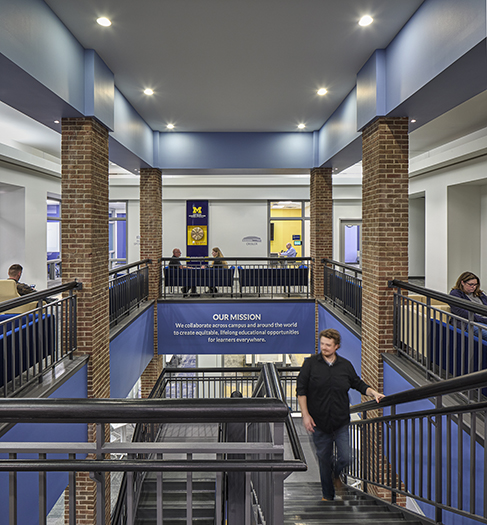
When the Center for Academic Innovation (CAI) outgrew its original home, University of Michigan faced an extraordinary challenge: creating a world-class digital learning and media production facility within three levels of former retail space located directly below an active parking structure, all while meeting strict budget and schedule requirements. As U-M’s digital innovation hub, CAI needed a highly specialized environment that could support its rapid growth and enable its mission to deliver transformative educational experiences on a global scale.
The resulting design approach centered on collaboration, adaptability, and speed. Architectural, structural, MEP, AV, IT, and acoustic disciplines worked as a unified team to deliver construction documents in just three months. The design team remained actively engaged through the seven-month construction process, providing on-site support to ensure that complex systems, specialty spaces, and user needs were fully coordinated and operational from day one.
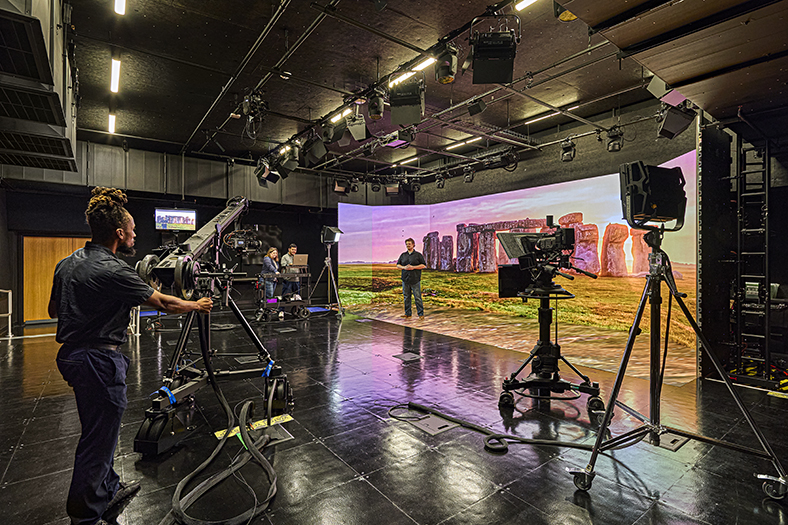
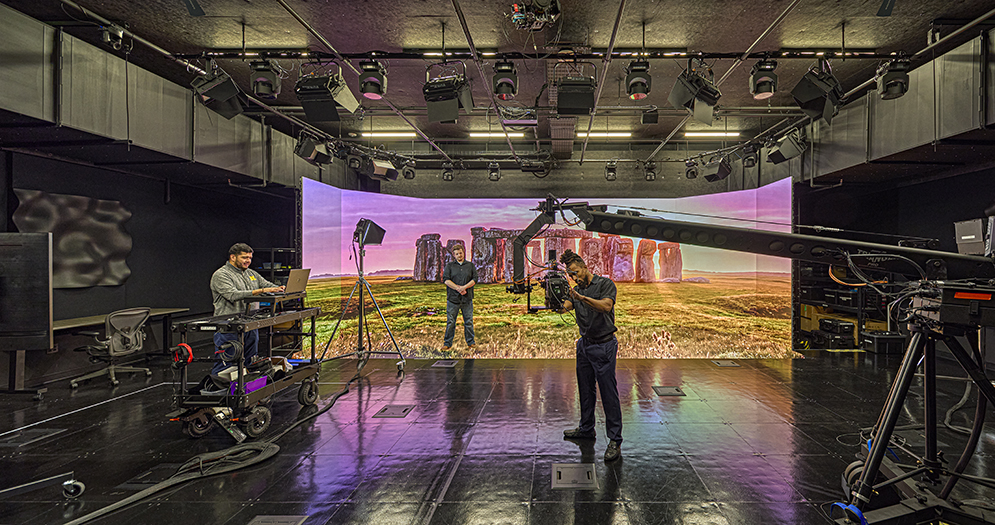
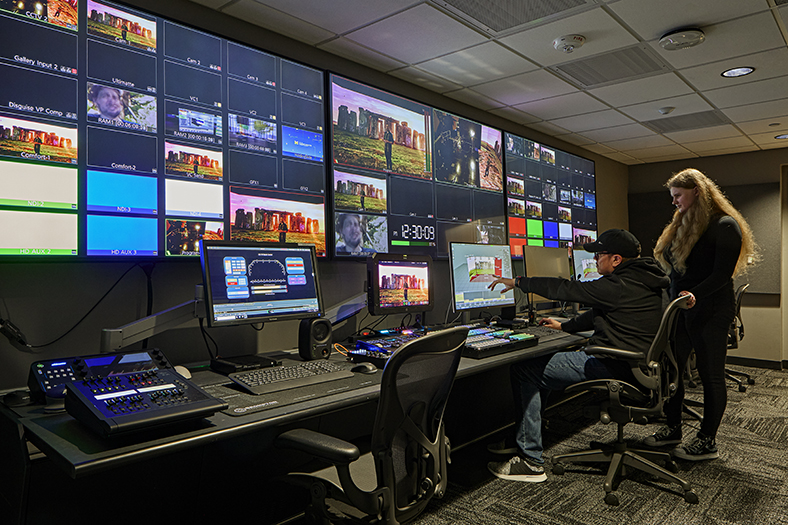
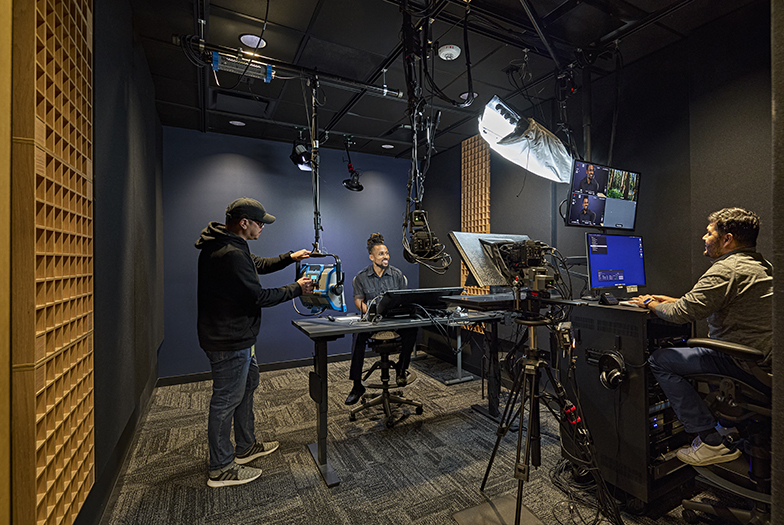
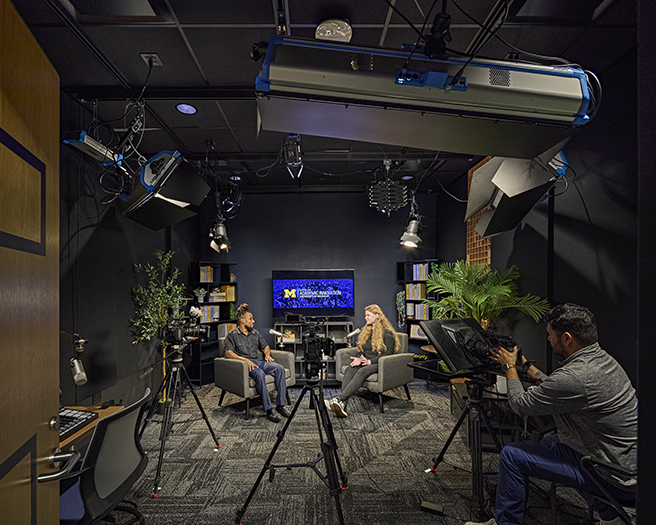
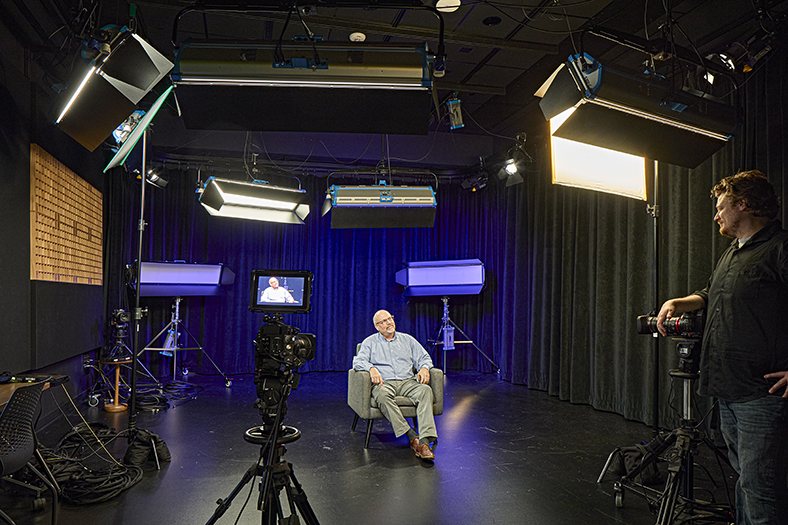
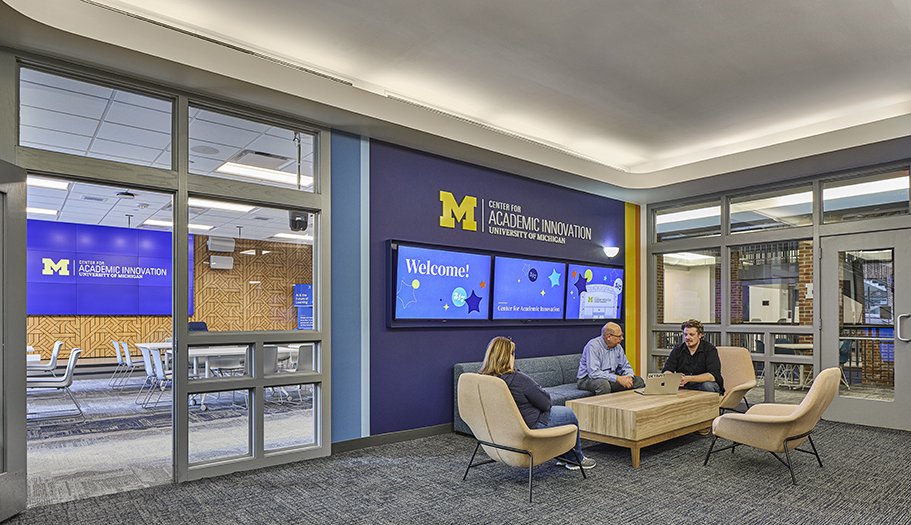
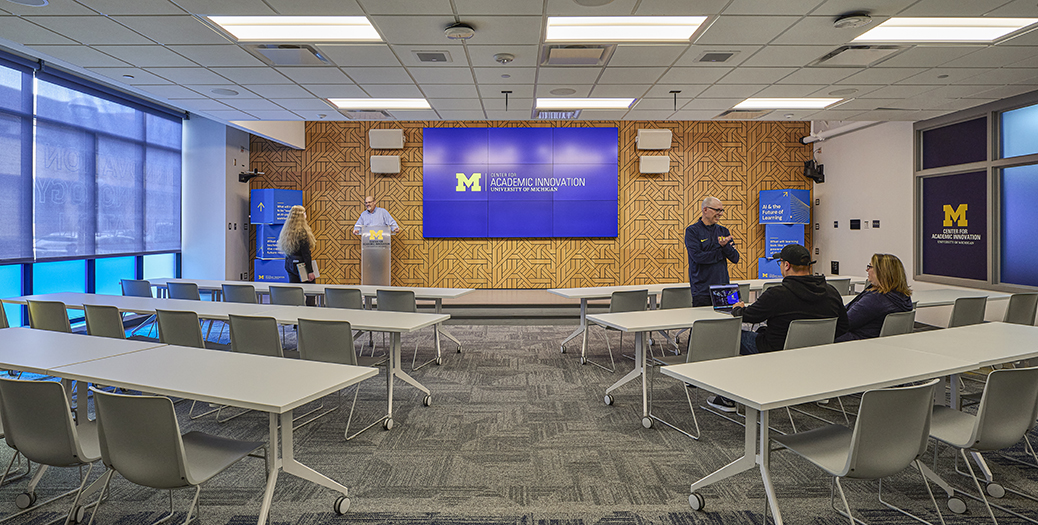
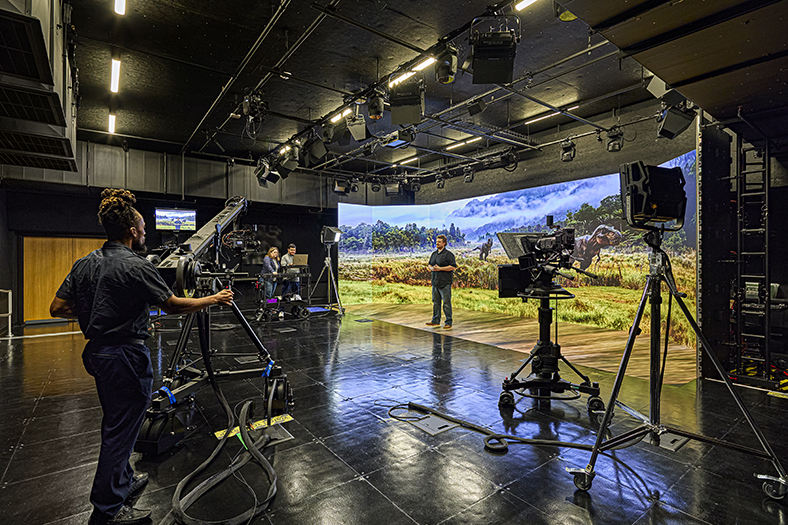
The resulting facility transforms underutilized leased space into a dynamic center for innovation and content creation. The project includes one of the nation’s largest Extended Reality (XR) video production studio, a suite of lecture capture studios, associated control rooms, edit suites, media labs, , conference rooms, administrative offices, and support spaces. A 70-person event venue with integrated broadcast capabilities enables hybrid collaboration, remote learning, and hosting of conferences for audiences around the world.
The completed facility provides the infrastructure necessary to support continued growth, experimentation, and innovation while demonstrating how existing building space can be reimagined to meet the evolving demands of higher education.
Rather than constructing a new facility, U-M embraced adaptive reuse as an inherently more sustainable solution, preserving existing structural systems, minimizing material consumption, reducing construction waste, and minimizing the embodied carbon associated with new development. By transforming underutilized urban storefront space inside an operational parking structure into a highly specialized center for digital learning and media production, CAI illustrates how thoughtful design, interdisciplinary collaboration, and strategic reinvestment in existing buildings can create innovative environments that serve both institutional goals and environmental stewardship.